01
Will it fit?
Equipment keeps getting deeper and heavier, so the enclosure can no longer be built to the old specifications. Match the width, the depth and the mounting-hole spacing first.
AI RACK ENCLOSURES · COLD AISLE CONTAINMENT
We make two things: the rack enclosure itself, and the contained aisle between racks. The parameters on this page are given from public standards and datasheets, each one cited to its source; the parts we do not make are also written on the page.
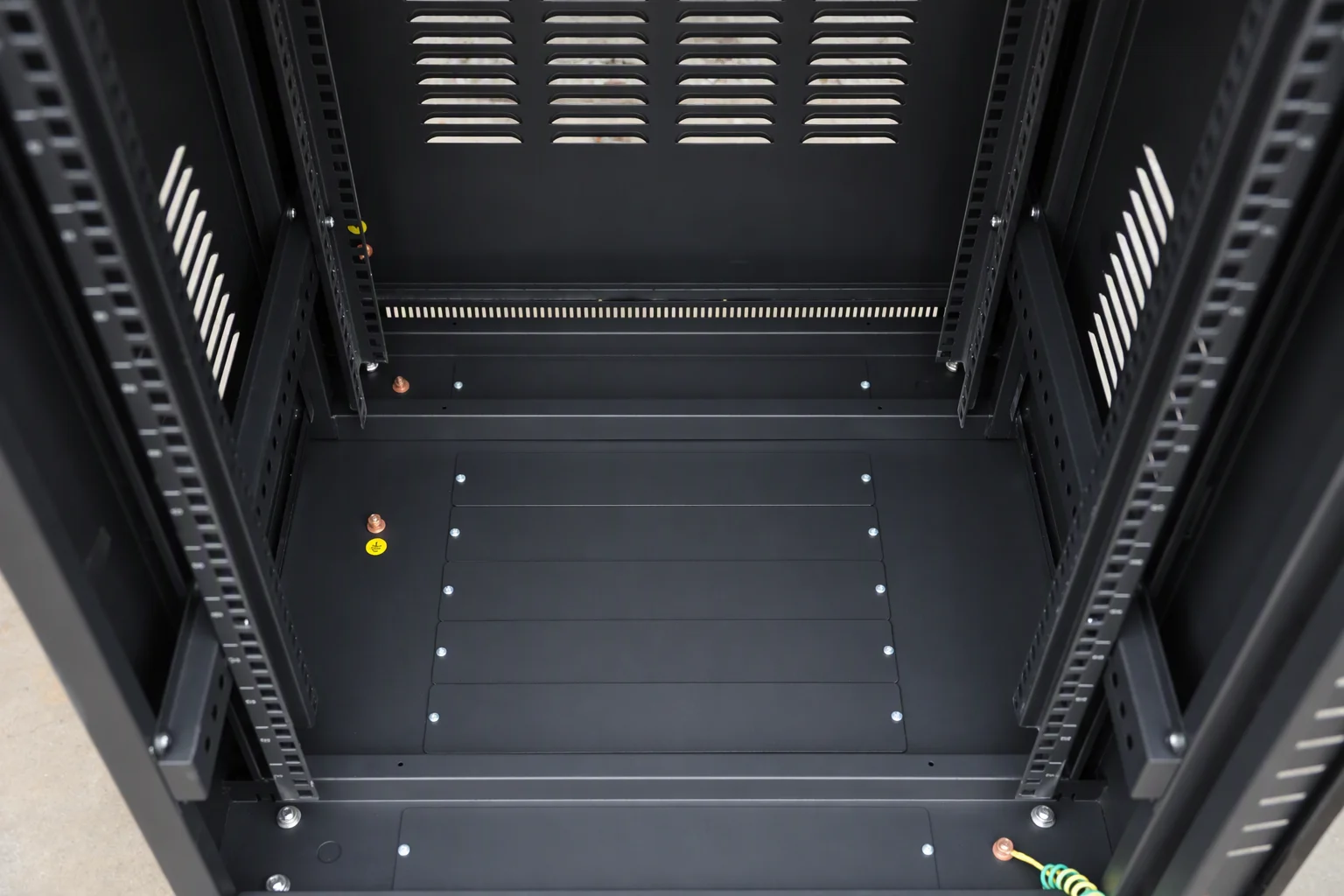
Equipment keeps getting deeper and heavier, so the enclosure can no longer be built to the old specifications. Match the width, the depth and the mounting-hole spacing first.
Cold air that bypasses the equipment and goes straight back to the return grille makes the cooling pointless. Match the aisle width, the rack width and the ceiling height first.
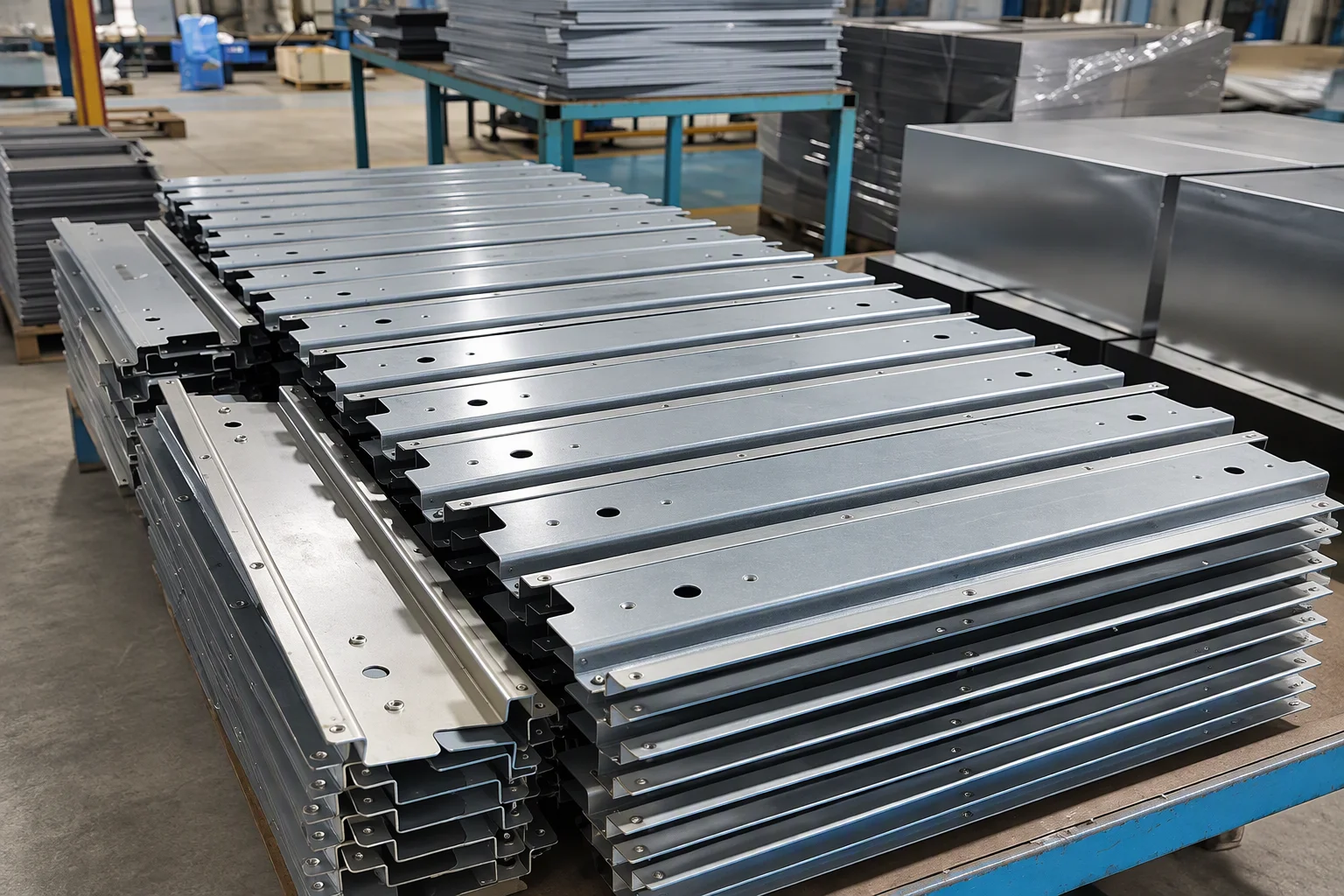
A rack is sheet-metal work. Look at cutting, bending, pretreatment, and the inspections done before it leaves the factory.
| Item | Value | Basis |
|---|---|---|
| Mounting width | 19 in (482.6 mm), EIA hole spacing | EIA/ECA-310-E |
| Frame width | 600 mm / 700 mm / 800 mm | Common datasheets |
| Height options | 42U / 45U / 48U / 52U | Common datasheets |
| Depth | 1,000 mm / 1,200 mm, expandable to 1,372 mm (54 in) | Common datasheets |
| Static load rating | 1,360 kg (3,000 lb); heavy-duty 2,268 kg (5,000 lb) | UL 2416 rated |
| Rolling load | 1,588 kg (3,500 lb) | Common datasheets |
| Sheet thickness | frame 14 ga. steel · doors and side panels 16 ga. steel · reinforcement corner pieces 12 ga. steel | Common datasheets |
| Front door open area | 79% | Common datasheets |
| Surface finish | pretreatment + powder coating, 500 h salt spray | ASTM B117 / D610-01 |
| Open rack (optional) | 21 in / OpenU 48 mm pitch / 48 V busbar | OCP Open Rack V3 |
Industry research estimates that in a conventional data room about 60% of the cold air returns to the return grille without passing through the equipment. Cold aisle containment seals the aisle in front of two rows of racks — a panel on top, doors at both ends, seals in the gaps — so the cold air can only enter from the front of the equipment.
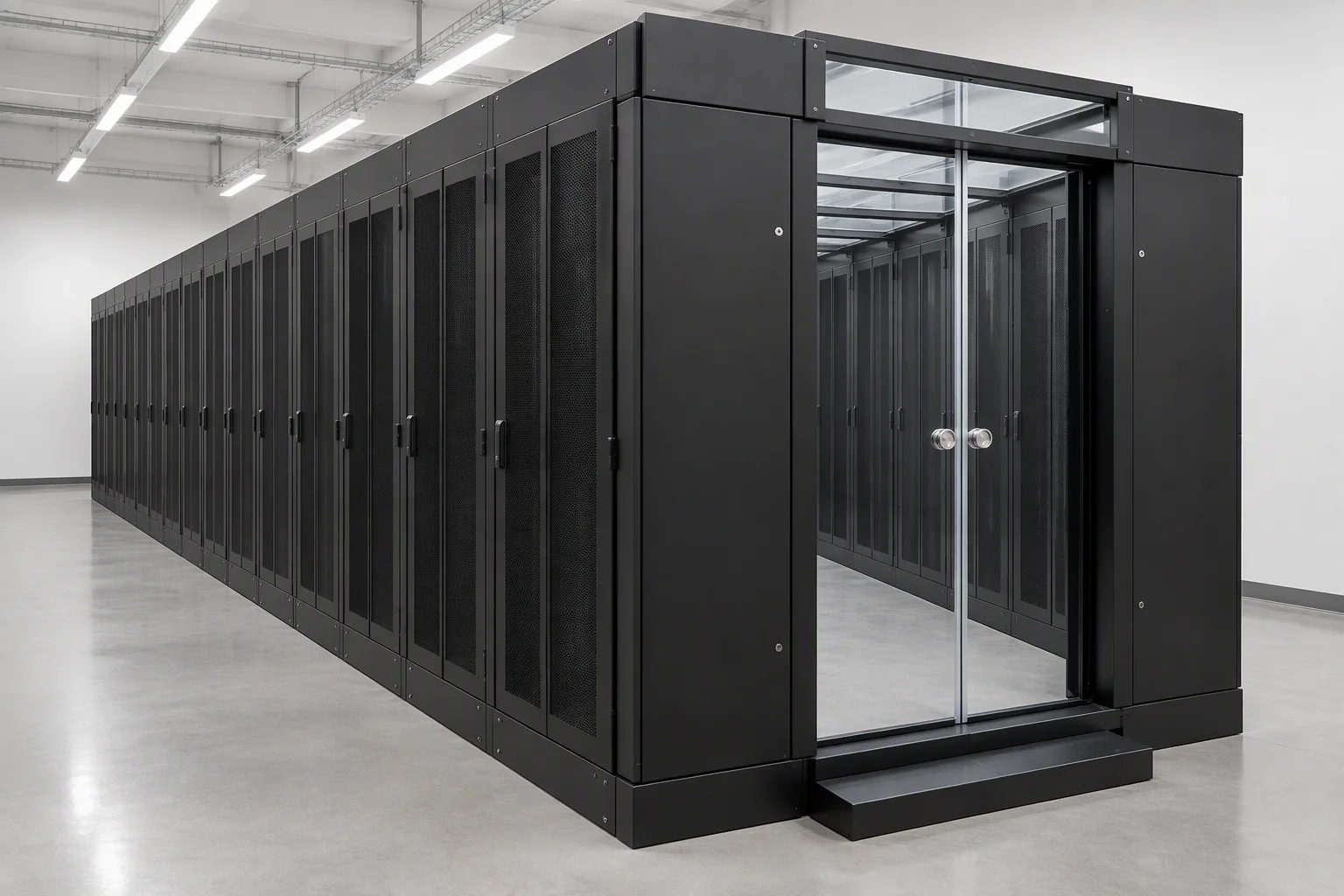
Two things only: the enclosure, and the structural parts that seal it.